


Sign featuring the harvest calendar at White Marsh Edible Trail in Centreville. Photo by Gregg Bortz, Maryland DNR
Agroforestry is the intentional integration of trees and shrubs into crop and livestock systems to improve productivity, resilience, and long-term sustainability. At the Maryland Forest Service, Francis Smith aims to expand its use for communities across the state.
“There is an edible and medicinal understory below our forest canopy that offers benefits to landowners ranging from backyard gardeners and beekeepers to traditional farmers,” Smith, a natural resources planner, said.
In Maryland, Smith’s recommended plant list consists of common elderberry, beach plum, black chokeberry, serviceberry, paw paw, American hazelnut, common persimmon, wild American plum, and high bush blueberry. Larger trees than can be incorporated include black walnut, hickory, chestnut and maple. Woody florals such as red osier and winterberry can also provide a harvest that can be turned into colorful craft products.
Agroforestry also creates opportunities beyond the farm. These products support emerging markets, including value-added goods like specialty foods and distilled products, while opening new income streams for landowners. Communities are also exploring “food forests” as a way to increase access to fresh, locally grown food in both rural and urban areas.
From the Past to the Present
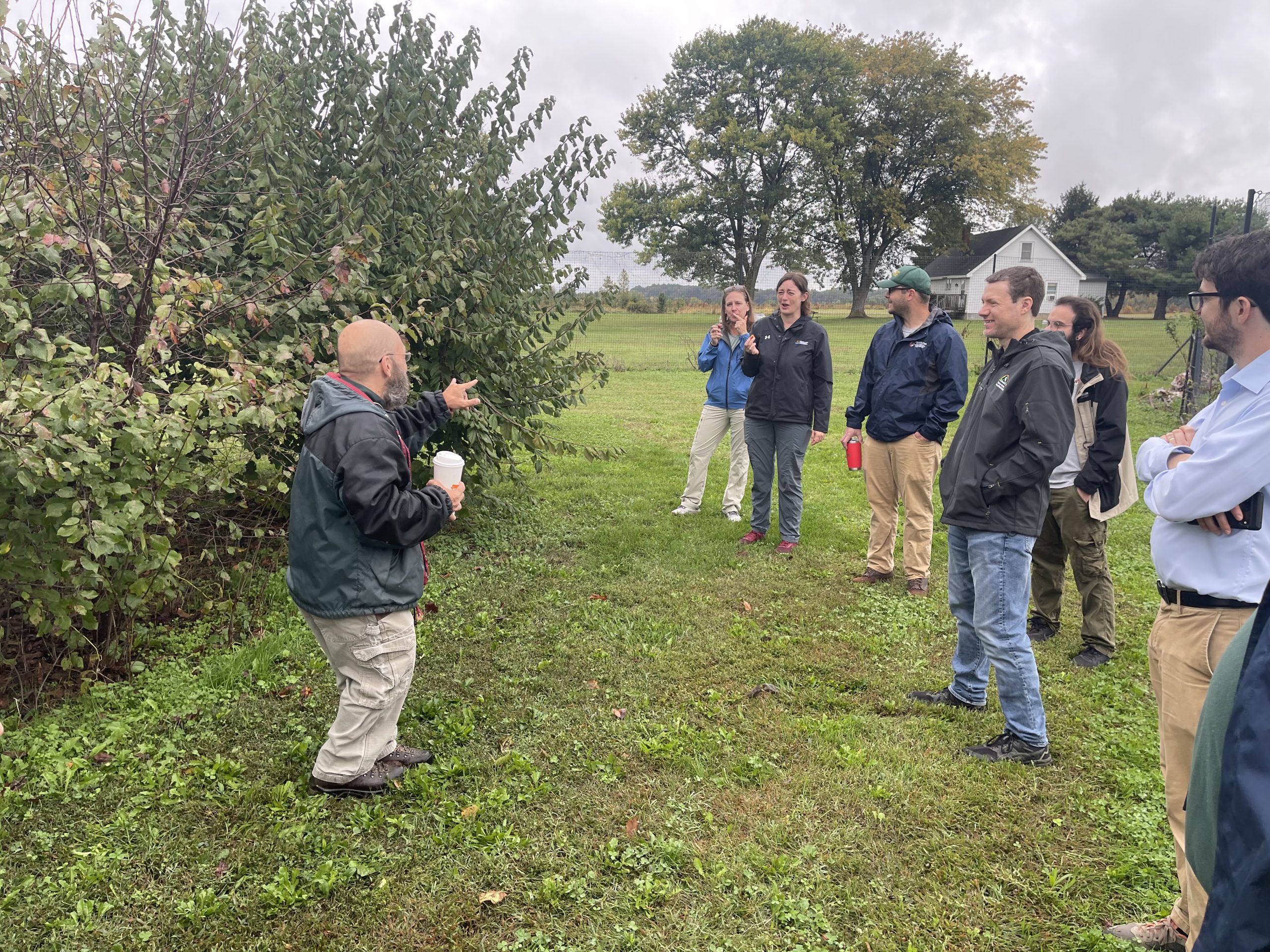
Francis Smith of the Maryland Forest Service explains the various species at White Marsh Edible Trail during DNR Science Week in October 2025. Photo by Gregg Bortz, Maryland DNR
In the seven years Smith has worked within agroforestry, he has seen interest grow considerably.
Much of the knowledge Smith is compiling has been preserved and shared by Native Americans.
“To me, agroforestry is really just a scientific word for indigenous stewardship,” Smith said. “[Native Americans] were the original stewards before ‘stewardship’ was even a word.”
The opportunity for communities is on display at the White Marsh Park Edible Trail. This experimental food forest or native fruit and nut orchard in Centreville features 6 species to explore: hazelnut, persimmon, American plum, black chokeberry, paw paw and high bush blueberry. All of them produce fruit or nuts that are edible, and they’re free for the taking for any visitor to the park.
Now in its seventh season, the food forest has a growing crop of native fruits, nuts, and berries. The food forest also powers a spirit of culinary experimentation that has stoked inspiration statewide, with student groups investigating oils that can be made from hazelnuts or nutrition-packed drinks from chokeberries.
“This is where I think Maryland’s range of native understory trees and shrubs that produce edible, healthy fruits and nuts could possibly serve as a steady supplemental income or farm marketing opportunity,” Smith said while also explaining that a food forest could be a great addition in large backyard gardens or for hands-on learning at schools.
Incorporating Agroforestry on Farmland
The Forest Service works in close partnership with the Maryland Department of Agriculture (MDA) in promoting and supporting agroforestry on farms and in communities.
Smith shared six agroforestry practices that could be implemented on farms. Many of these practices, especially food forests, can also be used in gardens, on school grounds, or even in public spaces.
- Practice 1: Windbreaks consist of a linear planting of trees, shrubs, or grasses that protect soil, crops, and livestock from wind damage.
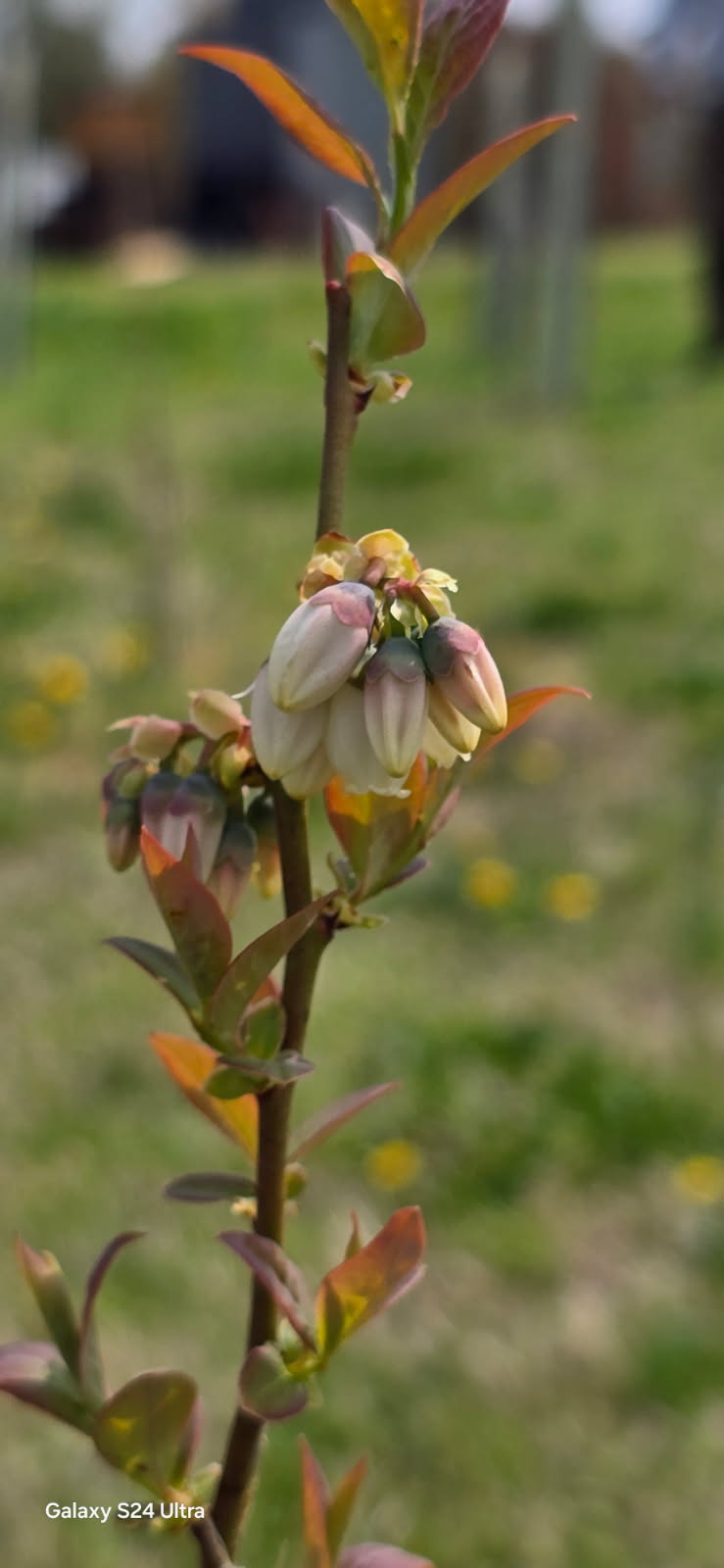
Blueberry flower, photo by Jennifer Dudley
“A working windbreak in agroforestry terms is just a windbreak that you would periodically harvest from,” Smith explained. “You can blend in fruit and nut-producing species that offer products for market while also providing wildlife habitat and pollinator support. Beekeepers can even use breaks to provide nectar and shield bees from wind.”
In some cases, needles from a windbreak consisting of coniferous trees can also provide mulch for blueberries, in particular.
- Practice 2: Multifunctional riparian forest buffers. Riparian forest buffers consist of trees and plants along waterways and wetlands, which act as a protective boundary by filtering pollutants, reducing erosion, and stabilizing banks. To create multifunctional buffers, edible understory plants would be added, giving farmers and landowners an additional harvest.
“We’re using trees and shrubs along streams and waterways because these are living filters,” Smith said. “Blending in agroforestry species that produce fruits, nuts, and syrups can improve the land and our health while providing potential new markets for farmers seeking new sources of income.”
- Practice 3: Alley cropping, which consists of planting crops between rows of trees.
“We already plant in rows, so why not maximize land use to the benefit of landowners?” Smith asked. “You really want to actively work every layer of the land. It’s about multifunctional landscapes and successive harvests. This means having different species from the herbaceous layer to the shrub layer to the tree layer and folding all that in.”
- Practice 4: Silvopasture combines trees, forage, and livestock all in the same plac. A typical silvopasture system could be bolstered by introducing fruit or nut-bearing trees into an already-cleared pasture or by adding forageable plants into woodland used by livestock.
“They’re basically raising livestock in between the tree rows, which provides spots of shade and additional fodder,” Smith explained. “Rotational grazing is key for long-term survival of trees incorporated into a livestock operation. Whatever forage is part of the grazing diet also covers up and protects soil from impacts of water and wind.”
- Practice 5: Forest farming involves cultivating medicinal, edible, or decorative specialty crops under an existing forest canopy.
“Growing and harvesting plants such as cohosh, goldenseal, ramps or wild ginger is part of what’s known as forest farming,” he said. “One of the neat things when you work with the understory is large production in small spaces.”
- Practice 6: Food Forests are sustainable, low-maintenance systems that mimic a natural forest on a much smaller scale. It often includes fruit or nut trees surrounded by shrubs, herbs, vines, and root crops.
While these agroforestry practices require less maintenance than traditionally farmed food, which require irrigation or fertilization for success, maintenance is still needed.
“When you’re planting, you need to consider the three W’s: weeds, wildlife, and water,” Smith explained. You need a plan for how you are going to manage those,because that’s going to be the things you’re going to always, always battle.”
There are also less mechanized options for harvest, meaning growers will need to hand pick much of the crops. However, Smith believes the benefits far outweigh the challenges.
The Future of Agroforestry
In June, the inaugural Mid-Atlantic Agroforestry Conference will take place in Pennsylvania. This year’s event is focused on forest farming and multifunctional buffers. Modeled after an interstate effort in the Midwest, the conference will provide Mid-Atlantic agroforesters, forest landowners, new and beginning farmers, service providers and conservation professionals insight into the state of agroforestry, products and marketing approaches, and case studies from practitioners.
The best way to distribute the harvest to the public remains a work in progress, Smith said, ranging from simple, pick-your-own gardens to working through food banks. Smith continues to educate and assist organizations who may have an interest in applying for grants to create edible trails.
“We’re in the early stages but it seems to all be coming together at the same time,” Smith said.
Anyone interested in getting involved in agroforestry can contact their local MDA Soil Conservation District. Funding is also available through the MDA’s Healthy Soils Competitive Fund. Additionally, the quasi-government Maryland Agricultural and Resource-Based Industry Development Corporation (MARBIDCO) can provide funding for farmers and forest product companies to purchase equipment. MDA can also help connect interested agroforesters with other public and private grant programs.
